Control that fits the spacecraft.
Planning around limited control authority; estimating biases and disturbances; adapting control laws to different hardware and goals.
Methods, results, and papers →
Patrick McKeen
MIT AeroAstro
I develop control, estimation, and autonomy methods that change what spacecraft can do and what hardware they need.
My work connects mathematical methods with spacecraft design: pointing precisely with fewer actuators, coordinating satellites using their environment, and learning how a spacecraft behaves as it operates.
Postdoctoral Associate · Robotic Exploration Lab
Massachusetts Institute of Technology
Research in focus · Attitude planning
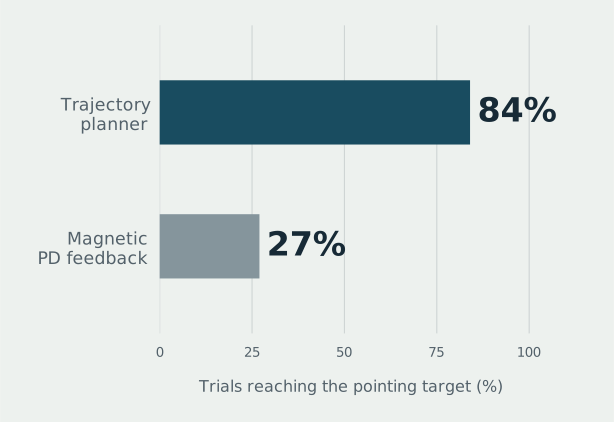
Selected contributions
Planning around limited control authority; estimating biases and disturbances; adapting control laws to different hardware and goals.
Methods, results, and papers →Use aerodynamic drag and sunlight to help satellites hold a formation, with geometry and control designed together.
Formation flight and autonomy →Explore how better models, calibration, and alternative actuation could enable precise pointing on small and flexible spacecraft.
Current work and next questions →Open research tools
GenADCS gives researchers a common framework for changing spacecraft, sensors, actuators, and control methods. It turns a new design choice into an experiment you can compare with the last one.
Explore GenADCS and SALTRO →Teaching & mentoring
I connect mathematical ideas to simulations, measurements, and physical systems. My teaching spans dynamics, astrodynamics, and satellite engineering, alongside laboratory development and research mentorship.
How I teach and mentor →Upcoming
Collaborate
I welcome conversations about spacecraft dynamics, estimation, control, and mission design, especially where a new method could change the hardware or the way a mission operates.
pmckeen@mit.edu →